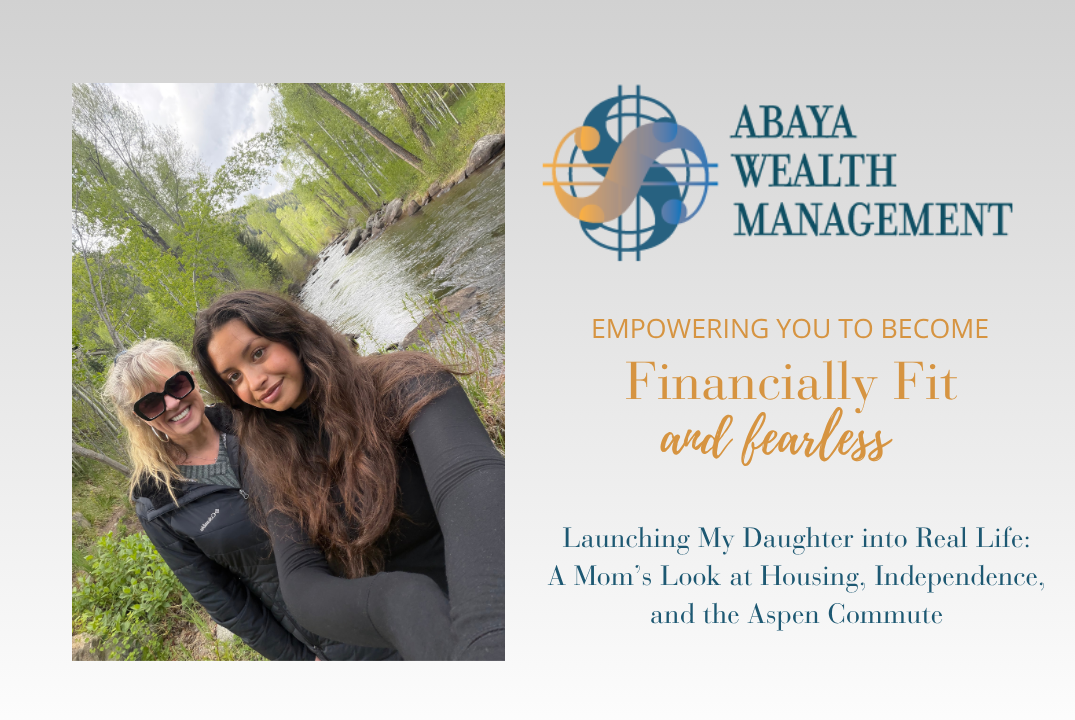
Launching My Daughter into Real Life: A Mom’s Look at Housing, Independence, and the Aspen Commute
Helping my daughter find housing near Aspen after college turned into much more than an apartment search. It became a lesson in affordability, independence, adaptability, and learning to navigate a life that looks very different from the one she grew up with. In my latest blog, I share what this experience taught both of us about adulthood, letting go, and finding confidence in the unknown.

My Mom Remembers When Women Couldn’t Get Credit on Their Own — And My Daughter Never Will
As I watch my daughter Jenna graduate college, move to a new state, and begin building her own independent life, I can’t help but think about how different things were for my mother’s generation. My mom remembers a time when women couldn’t get credit without their husband before the Equal Credit Opportunity Act of 1974. In this blog, I reflect on how far women have come financially in just a few decades, why financial education for women still matters today, and why I’m so passionate about helping women build confidence around money and their future.

Why Every Woman Needs Credit in Her Own Name
Recently, I learned something about my mom that really stopped me in my tracks. Even though she has used their family credit cards for years, she was never the primary account holder. It sparked a bigger conversation about financial access, independence, and how many women from her generation were never encouraged, or even allowed, to establish credit in their own names. This experience reminded me that financial preparedness is not about mistrust in a relationship. It is about making sure every person has the ability to navigate life confidently and independently if circumstances suddenly change. It’s a simple but important reminder that financial security also means having access, credit, and accounts in your own name.

When Money Stress Follows You Home
April is National Stress Awareness Month, and there is one kind of stress that has a way of touching nearly every part of life: money stress.
It usually does not begin with one dramatic moment. More often, it builds quietly. It is the tension you feel when the credit card bill comes in. The conversation you keep meaning to have with your significant other but avoid. The tightness in your chest when you think about groceries, tuition, retirement, or simply how expensive everyday life has become.
And that is what makes it so difficult. Money stress is rarely just about money.
It has a way of following us home. It shows up in our relationships, in our sleep, in our health, and in the way we carry ourselves through the day. It can make us crankier with the people we love, more likely to avoid hard conversations, and more likely to hold worry in silence.

When Wedding Season Collides with Real Life
Weddings are meant to be joyful—but they can quietly become expensive fast. If you’ve ever wondered how to afford being in multiple weddings without going into debt, this blog post walks you through how to plan ahead, understand your cash flow, and make smart spending decisions during busy social seasons.

When Love, Money, and Milestones Collide: Paying for a Wedding Without Sacrificing Retirement
I’ve noticed a shift lately—more parents navigating weddings and wondering what “helping” should actually look like.
It’s such a meaningful moment, but it also comes with some bigger financial decisions than people expect.

Check Out My New Seminar Sessions
These sessions are for:
Groups of high-achieving women who want financial education that is:
clear, practical, and organized
focused on decision-making—not fear
built for real-world complexity
grounded in long-term security and a more vibrant future
These seminars are educational—not a sales presentation.

Your 401(k) Isn’t “Set It and Forget It” (Because Sometimes It Forgets You)
Your 401(k) is a powerful tool, but it’s not a mind reader, and it’s not always a loyal assistant.
A quick check-in once or twice a year keeps your plan aligned with your choices, your goals, and your life.
Because no one will care about your retirement as much as you do—that’s not scary. That’s empowering.

Your 1099 From Your Brokerage Account: A Love Letter From Taxes (With Footnotes)
Every year around late January through February, brokerage firms send out a little bundle of joy called a Form 1099.
If you’ve ever opened your 1099 and thought, “Why does this feel like it was written by robots for robots?” you’re not alone.
So let’s translate the big three you’ll usually see reflected on that 1099:
Dividends
Capital gains
Capital losses

Social Security Headlines vs. Real Life: What Actually Matters Right Now
Every year, Social Security makes headlines.
And every year, those headlines tend to raise more questions than they answer.
This year’s changes feel especially confusing. Cost-of-living adjustments are kicking in. Medicare premiums are rising. Long-standing rules like WEP and GPO have been repealed, and some people are seeing unexpected changes, or even retroactive payments, show up in their accounts.

Four Years In: Practicing What I’ve Been Preaching
This month, my company turned four.
When I started Abaya Wealth Management, I wasn’t chasing rapid growth or external validation. I wanted to build something sturdier than that. I wanted a firm that helped clients feel more secure about their future and allowed me to live the life I was intentionally choosing in the present both personally and professionally.
The truth is the concepts I share in my blogs aren’t theory. They’re not aspirational fluff. They’re the framework I use every day.
· Real security is built over time, not rushed.
· Joy shows up when you stop making decisions from fear.
· Consistency creates confidence—financially and personally.

How Letting Go of What No Longer Serves You Creates More Time and Clarity
Every January starts the same way. We turn the page, take a deep breath, and declare: This is the year.
We vow to exercise more, save more, stress less, be better.
And then… life shows up.
There’s a reason New Year’s resolutions have such a short shelf life. Research consistently shows that most resolutions fade by February. Not because people lack motivation or discipline, but because resolutions are vague. “Lose weight” doesn’t survive carpool, deadlines, aging parents, and a calendar that fills itself.
Goals, on the other hand, can.
That’s why I love to use SMART goals . They aren’t about perfection or reinvention. They’re about clarity, intention, and momentum.

This Year, Skip the Resolutions. Set SMART Goals Instead.
Every January starts the same way. We turn the page, take a deep breath, and declare: This is the year.
We vow to exercise more, save more, stress less, be better.
And then… life shows up.
There’s a reason New Year’s resolutions have such a short shelf life. Research consistently shows that most resolutions fade by February. Not because people lack motivation or discipline, but because resolutions are vague. “Lose weight” doesn’t survive carpool, deadlines, aging parents, and a calendar that fills itself.
Goals, on the other hand, can.
That’s why I love to use SMART goals . They aren’t about perfection or reinvention. They’re about clarity, intention, and momentum.

New Year Reflections
This past year brought so much to be grateful for. I’m deeply thankful for the growth of my business and, even more, for the people who trusted me with their stories, their worries, and their dreams. That kind of trust is never something I take lightly.
I’m grateful for the friendships that sustained me, the laughter around the table, and the steady love of family that reminds me who I am when things get busy or noisy. I’m grateful for the small, intentional steps I took to make my world better, the healthier routines, clearer boundaries, more presence. None of them were flashy, but together they mattered.
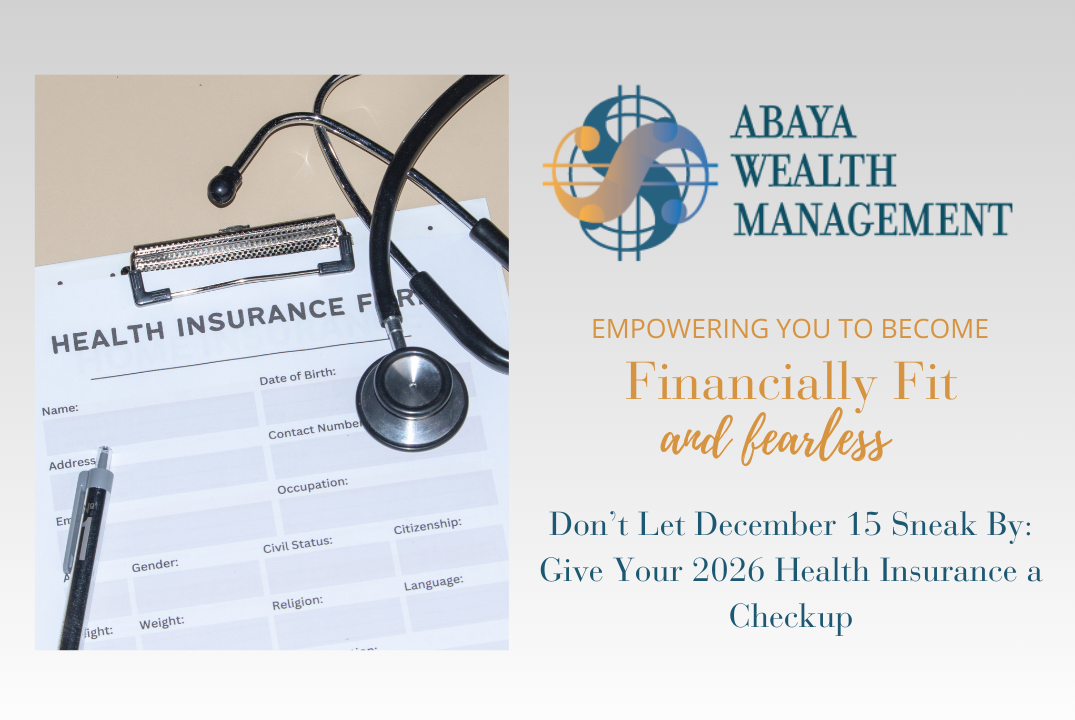
Don’t Let December 15 Sneak By: Give Your 2026 Health Insurance a Checkup
Your 2026 health insurance deserves a quick checkup.
This is the time to pause and ask:
What is my health insurance actually going to look like in 2026?
Are my doctors and hospitals still covered?
Are my prescriptions still covered the way I expect?
Each year, insurers can change what they cover, what they charge, and which providers are in-network. A plan that worked well in 2025 may quietly become more expensive, more restrictive, or simply not a good fit for the year ahead.

How to Talk About Estate Planning at the Holiday Table
Between talk about travel, new babies, or even recent Social Security changes for 2025, there’s room for one more conversation that really matters at the holiday table.
This isn’t about being morbid. It’s about love, clarity, and reducing chaos for the people you care about most. Whether you’re talking to your aging parents about their estate plan, or to your adult children about how you’d want to be cared for if you were incapacitated, these conversations are a gift.

Sportsbooks aren’t just after sports fans — they’re after our sons
Young men are being targeted with nonstop ads, “risk-free” promos, and apps that make betting feel like a normal part of watching the game. And for many of them, the line between a fun bet and a “money strategy” is getting blurry.
As a financial professional and a parent, I’m not anti-fun.
I am very pro-future.
There’s a huge difference between gambling and investing:
• Gambling is short-term, emotional, and designed so the house wins.
• Investing is long-term, intentional, and designed to give your money a chance to grow.
For parents of young men ages 14–34, this isn’t a “someday” conversation.
It’s a right-now conversation.

What to Do When Your Care for Others Outpaces Your Cash Flow
Ever feel like your money should stretch further — but somehow it never does?
That was Susan & Mark. Two full-time jobs, supporting both their son and aging parent… yet every month felt tight.
When we looked closer, it wasn’t “bad spending” — it was invisible generosity.
Once they tracked their cash flow (not a budget, a flow), they finally saw where their money was really going — and made small, powerful shifts that brought relief and freedom.
Because when your money moves with intention, generosity becomes sustainable.